If It’s in Your Head, It Dies With You
Lisa Liberatore has started, built, and successfully sold a tea company, a burrito restaurant, and Bangor’s first coworking space. Now, as Upstart Maine’s ecosystem connector, she helps Maine entrepreneurs do what most never think about: build a business that can live without them.
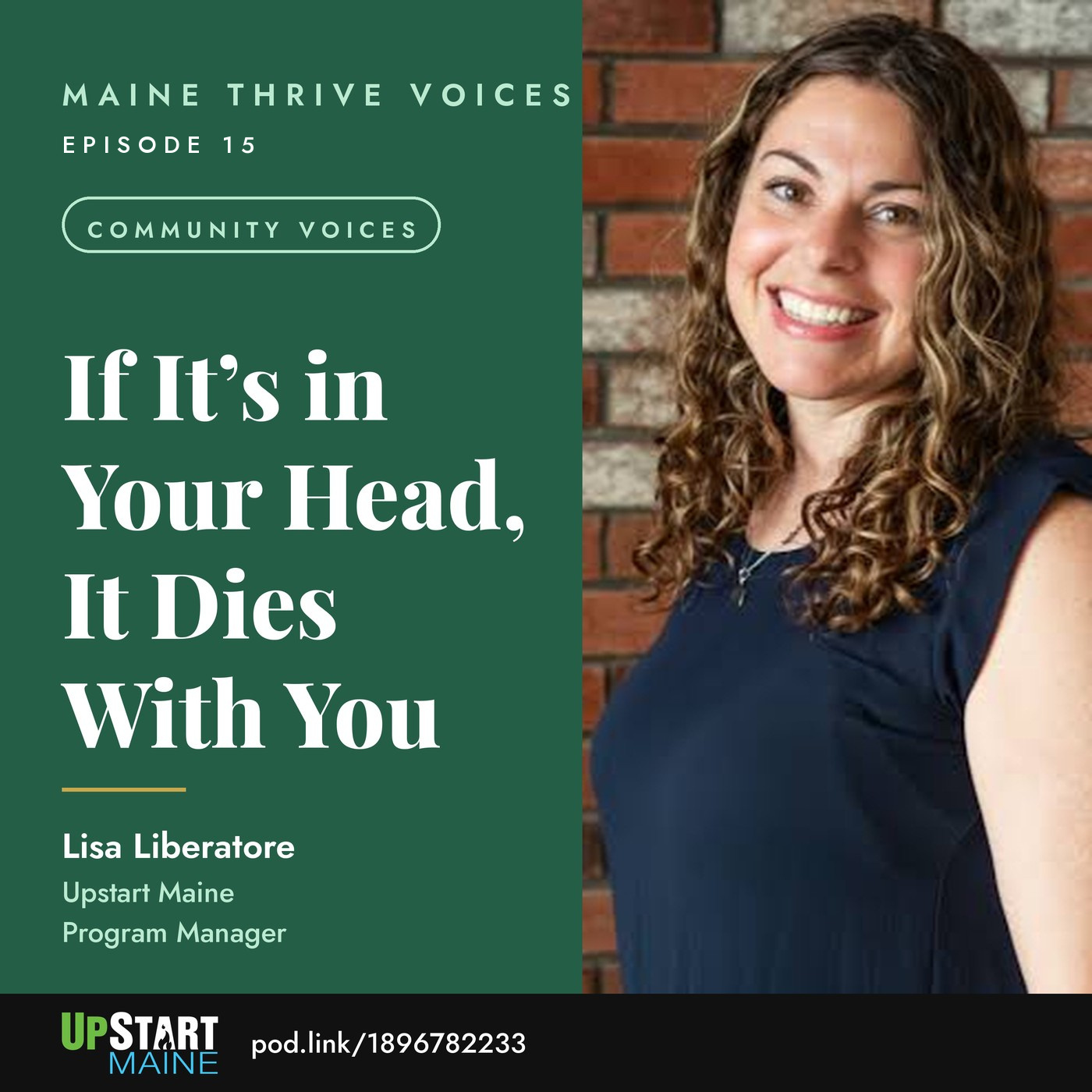
Lisa Liberatore’s job title is Program Manager and Entrepreneur in Residence at Upstart Maine, but the phrase that fits her best is the one the ecosystem uses: connector. Her work is meeting entrepreneurs one-on-one, listening for the gaps in their knowledge or their network, and making the introduction that unlocks the next step. “I don’t have to have all the answers,” she says, “but I might have somebody that could provide you some insight.” And here’s the part she wants every Maine business owner to hear: meeting with her is free. Upstart Maine is a nonprofit, and beyond ticketed events like Blitz — its big annual conference — the help costs nothing.
From Career Counselor to Burritos
The connecting started early. In her first career, doing career counseling in higher education, Lisa was already building an employer database and matching students to the right people. But she didn’t like reporting to an office, and when a friend in the coffee and tea import business offered to help her set up an online store, she launched what became Baxter Tea Company — and soon found herself sharing a retail space in downtown Gardiner.
Then a restaurant across the street moved out and the building went up for sale. Lisa loved burritos, and the closest ones were a half hour away in Bath. So she ran customer discovery on every person who walked into her shop — would you buy burritos across the street? tacos? how much would you spend? — then bought the building, put a tenant upstairs to cover the mortgage, and opened Lisa’s Legit Burritos downstairs. She had never worked in a restaurant a day in her life.
Build to Be Replaceable
What sets Lisa apart from most small business owners is her stated goal from day one: “I wanna be replaceable.” Where many owners build themselves a job, Lisa builds systems other people can run — because she knows she loves starting things, testing ideas, bringing a vision to life, and then handing the torch to someone else. That’s how Baxter Tea, Lisa’s Legit Burritos, and CoWork all found successful exits — each sold to customers who already knew and loved the brand.
CoWork itself was born from a problem she and Dr. Jason Harkins kept living while running the Scratchpad Accelerator: endless meetings in echoing Bangor coffee shops with nowhere for entrepreneurs and remote workers to land. They validated the hole in the market and built Bangor’s first coworking space — day, week, or month, no long-term contracts — a hub where people in different industries could still have coffee together.
Head on a Swivel
The pandemic dismantled the world she’d built — the coworking space limited to a trickle, her son home in second grade. Lisa’s response was the move she now teaches: look in the mirror, admit this isn’t working, and zoom out to what’s next. She noticed her own real estate agent’s name on a leaderboard, thought “I could do that,” took the class, and joined NextHome. When university funding later dried up and her position disappeared — “Lisa did great; there wasn’t money for Lisa” — she asked the same question again: what does the next chapter look like? “As long as you have your head on a swivel and you’re willing to keep seizing opportunities,” she says, “it usually turns out pretty good.”
The Power of Transparency
Lisa’s first book, The Power of Transparency, opens with a moment every owner will feel in their bones: her manager quit when Lisa was thirty-four weeks pregnant — for a job with health insurance, something Lisa understood completely, because it’s a benefit many Maine small businesses and nonprofits simply can’t afford. There was no time for self-pity or a slow onboarding; the clock was literally ticking.
The book’s core idea is that transparency makes hard times easier. Naming what’s going on — “I’m dealing with something; if I seem distracted, it isn’t you” — removes the unintended dissonance that builds when people are left guessing. It’s a leadership tool, not a confession booth.
What Founders Get Wrong About Capital
Through Scratchpad, Lisa has worked hands-on with more than twenty scalable companies, and the founders she’s guided have collectively raised over fifteen million dollars. Her honest take on who makes it: sometimes it’s luck — timing, product-market fit, finding the right investor. What founders most often get wrong is underestimating the work before the pitch: knowing your cash flow projections cold, pressure-testing every assumption with mentors and advisors, and understanding that a yes only opens due diligence — and that giving up equity means another voice at your table.
More Collisions
Ask Lisa what makes the Bangor region special and she doesn’t hesitate: people are willing to meet with you. They’ll have coffee, give you their time, and get energized by someone asking good questions. What the region still needs, she says, is more collisions — more rooms where entrepreneurs can say out loud what they’re wrestling with — and that’s exactly the programming she’s building at Upstart, from AI-for-small-business sessions to cybersecurity webinars to the Green Light Maine boot camp partnership.
Her connecting instinct doesn’t stop at business. As Vice President of the Animal Orphanage in Old Town — an organization close to this show’s heart — she brought her systems-building to a grassroots shelter that had been tracking donations on a spreadsheet, and is now working toward an endowment to protect what volunteers spent hundreds of hours building.
And her parting advice for any Maine owner who wants to thrive, not just survive, is the line this episode is named for. Think about your exit now. Document your systems. Know your numbers. Build the playbook someone else could pick up tomorrow — because if a medical issue, a divorce, or a pandemic hits and the business lives only in your head, you’re trapped. “If it’s in your head,” Lisa says, “then it dies with you.”
Maine Thrive Insights is produced by Smith Digital Solutions, LLC in Bangor, Maine. This Insight is a companion to Maine Thrive Voices, Episode 15, part of the Community Voices chapter.